
Beige Book: Affluent Continue Spending as Other Consumers Turn Cautious
September 02, 2026


The Southeast economy continued to gradually expand in late summer, even as contrasts persisted between the spending habits of cost-conscious consumers of modest means and those of more affluent households, according to the new Beige Book report from the Federal Reserve Bank of Atlanta.
This edition of the book included a section reporting that rising living costs intensified financial strain among low- and moderate-income groups during the summer. Contacts among community service agencies said many individuals and families have increasingly turned to debt such as credit cards, payday loans, and "buy now, pay later" plans to cover even essential expenses.
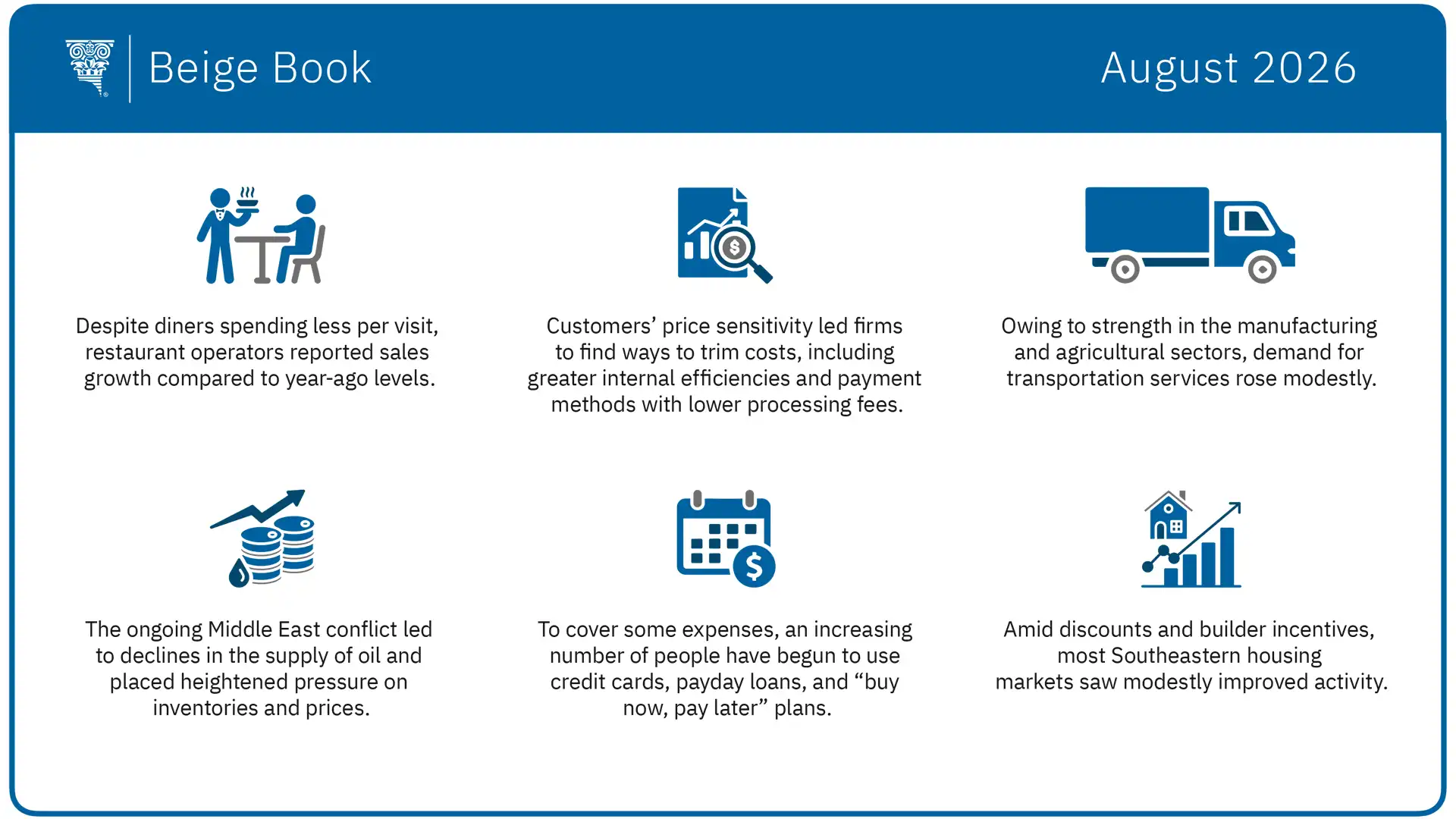
At the same time, consumer spending grew modestly on the strength of "robust activity in the luxury segment." The Beige Book noted that demand for high-end dining and experiences remained strong. Nevertheless, retailers also said consumers overall continued to seek out value at lower prices by buying more store brands instead of pricier name brands. And restaurants reported more caution as diners spent less per visit, even though for most operators sales growth compared to a year earlier was slightly positive.
The contrasting high-end/low-end story was also present in the tourism business, an important segment in the Atlanta Fed's district that includes extensive coastline in Florida and four other states. Tourism activity grew modestly and demand was concentrated in expensive properties, contacts reported. In fact, midrange travel segments noted declines in both leisure and business travel spending.
Consumer spending accounts for about two-thirds of US gross domestic product and is thus a critical part of the macroeconomy.
In other sectors:
- Employment levels were basically unchanged from the previous six-week period. Healthcare has buoyed the overall labor market for years, but hiring in that industry slowed somewhat, according to contacts. Meanwhile, more contacts said they are using artificial intelligence tools, but they do not expect them to eliminate many jobs in the near term.
- Prices and nonlabor costs rose. Insurance and healthcare cost increases were notably robust, and freight and other shipping costs continued to rise because of fuel surcharges. In general, businesses sought to trim costs in the face of price-conscious customers. Cost-containment measures included internal efficiencies, switching payment methods to avoid processing fees, and having ships travel more slowly to cut fuel usage. Firms that said they have been able to raise prices are mostly in industries tied to data center construction.
- Home sales improved modestly across most markets in the Sixth District, with discounts and incentives fueling activity.
- Commercial real estate activity expanded, with most segments reporting moderate growth. Demand outpaced supply in top-end, or class A, office space, and Atlanta firms noted numerous projects under way to convert underperforming class B and C office space to multifamily residences. Retail vacancies fell, with growth concentrated in value-oriented brands benefiting from price-conscious consumers.
- Transportation demand rose modestly amid emerging strength in the manufacturing and agricultural sectors.
- Manufacturing activity grew at a moderate pace. Production linked to aerospace, defense, and data centers was particularly strong, while demand for consumer goods manufacturing continued to wane.
- Energy sector conditions were mixed. Oil supply declines were attributed to challenges navigating the Strait of Hormuz and other routes amid renewed conflict in the Middle East, putting increased pressure on inventories and prices.
- In banking and finance, loan growth remained modest. Although auto and credit card loan portfolios declined modestly, short-term personal loans along with niche and specialized lending for individuals and businesses remained prevalent.
The Beige Book is a Federal Reserve System publication about current economic conditions across the 12 Federal Reserve districts. The Fed System and regional reserve banks publish the Beige Book eight times a year, before each meeting of the Federal Open Market Committee. The reports from each District characterize regional economic conditions based on a variety of mostly qualitative information, gathered directly from District sources, including interviews and online questionnaires completed by businesses, community organizations, economists, market experts, and other sources. The Committee next meets September 15 and 16.