
Beige Book Finds Modest Growth amid Ongoing Cost Pressures
November 25, 2026


Cost pressures showed few signs of easing for firms across the Southeast, according to the new Beige Book from the Federal Reserve Bank of Atlanta.
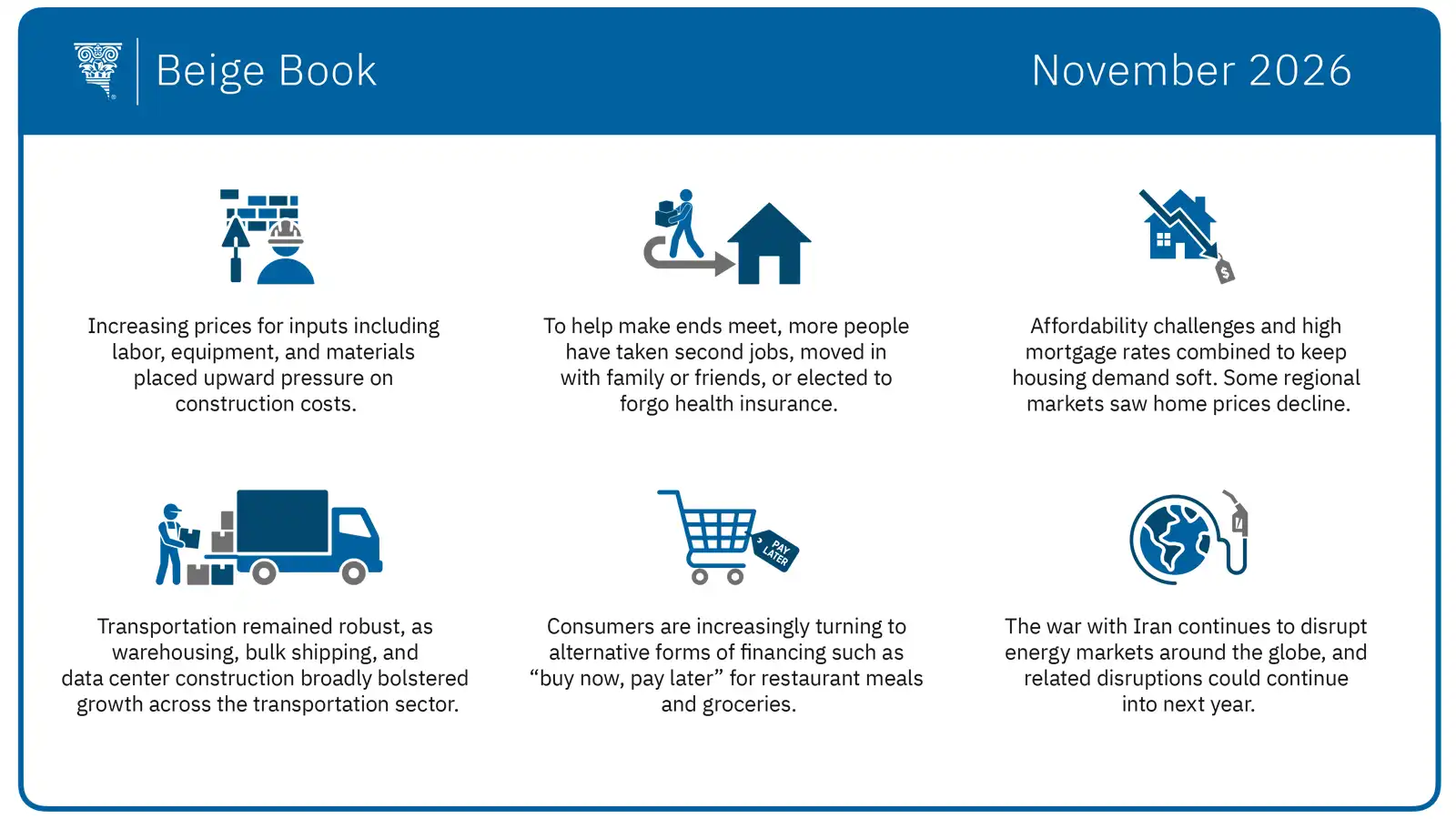
Business contacts continued to report cost pressures emanating from sources including healthcare, insurance, technology, energy, tariffs, and transportation. At the same time, construction costs kept climbing thanks to rising prices for materials, equipment, and labor, the Beige Book reported.
Meanwhile, the ability to pass along higher costs in the form of price hikes remained patchy. Many contacts said price hikes lagged rising costs, particularly for consumer products.
Price stability constitutes half the Federal Reserve's dual mandate; the other is maximum employment. On that front, the Beige Book suggests the news is better as employment levels remained stable. There were few reports of layoffs, and a minority of firms said hiring has picked up.
Overall, the region's economy grew modestly over the period, covering roughly mid-September through October.
In other sectors:
- Community contacts reported ongoing struggles among low- and moderate-income households. In particular, high housing costs have undercut households' ability to absorb other rising expenses. Nonprofit contacts said that after trading down to buy cheaper goods earlier in the year, more people had begun taking second jobs, moving in with family or friends, or forgoing health insurance.
- Housing demand softened amid high mortgage rates and affordability challenges. Regionwide, home prices were stable though contacts reported declines in markets including Atlanta, Orlando, and Savannah.
- Demand for transportation services grew modestly. Warehousing, bulk shipping, specialized transport, and data center construction continued to support growth across various modes of transport.
- Manufacturing activity improved a bit. Contacts reported strength stemming from data center construction, aerospace, and other advanced manufacturing segments. On the other hand, makers of consumer products reported weakened demand.
- In banking and finance, consumer lending increased moderately and contacts noted growing use of “buy now, pay later” financing for restaurant meals and groceries. Banking contacts generally were cautious, citing ongoing cost pressures, funding competition, and uncertainty.
- Energy industry contacts said they expect Iran war–related disruptions to last into next year. Utility contacts reported that future demand was uncertain as costs rise for data center construction and planning becomes more complicated. Also, continued shifts in federal energy policies have exacerbated uncertainty in the sector.
The Beige Book is a Federal Reserve System publication about current economic conditions across the 12 Federal Reserve districts. The Fed System and regional reserve banks publish the Beige Book eight times a year, before each meeting of the Federal Open Market Committee. The reports from each District characterize regional economic conditions based on a variety of mostly qualitative information, gathered directly from District sources, including interviews and online questionnaires completed by businesses, community organizations, economists, market experts, and other sources. The Committee next meets December 8 and 9.