
Beige Book: Regional Economy Grows, Albeit Modestly
March 04, 2026


The latest Beige Book lived up to its name.
Beige is among the most neutral of colors, and the new report from the front lines of the Southeast's economy is decidedly neutral as well, relating that economic activity across every sector was down a smidge, about the same, or up a tad.
Broadly, the region's economy expanded "at a modest to moderate pace" during late January and February, according to the March 4 Beige Book.
It's mostly a more-of-the-same story. Firms across the Sixth District didn't do much hiring or firing, so employment levels were flat to slightly down, except in healthcare and data center construction where hiring was more brisk.
Among workers and job seekers, the report found widespread concern about the labor market. Although some individuals expressed confidence that they could find a new job, if necessary, most indicated that the job would likely be a step down in terms of wages, schedule, and benefits.
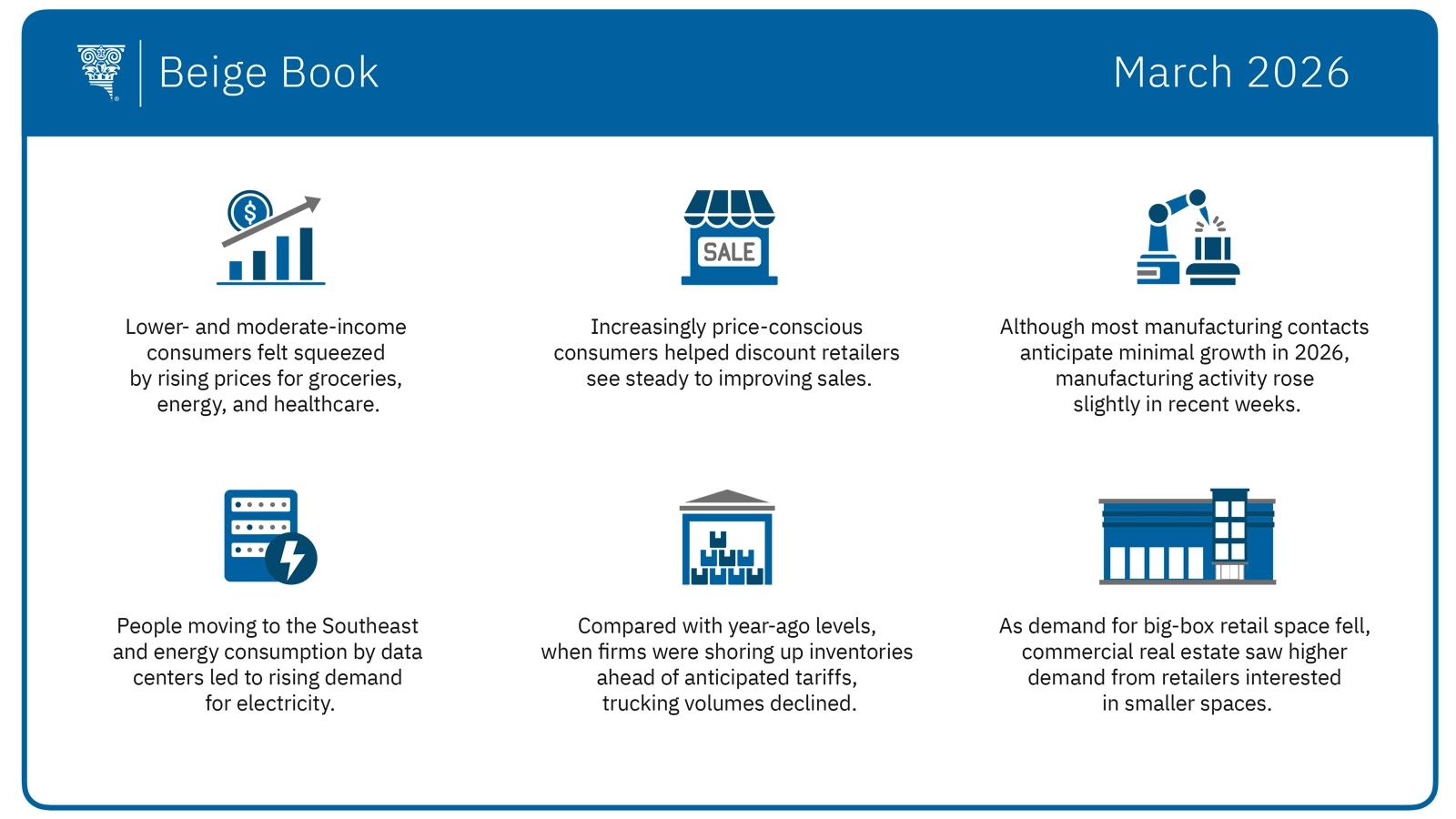
Prices across the board were unchanged to slightly up. However, high prices for groceries, energy, and healthcare continued to pinch lower- and moderate-income consumers, and nonprofit agencies saw increased requests for food and rental assistance.
In other sectors:
- Retailers reported small sales growth over the previous Beige Book reporting period. Discount stores noted steady to improving sales, supported by price-conscious consumers across income levels. Higher-end retail sales remained resilient. Auto dealerships faced ongoing softening demand for new vehicles, though used car sales were healthy as consumers traded down.
- In commercial real estate, high-end class A space accounted for most new office construction, much of it geared toward demand for smaller spaces. Much demand for retail space was also from parties interested in smaller footprints, as interest in big-box retail declined.
- Among transportation contacts, railroads reported that traffic improved through the first three weeks of January, but winter weather caused significant delays in the last week of the month. Trucking contacts saw volumes dip compared with levels a year ago, when activity was buoyed by firms' stockpiling inventories before tariffs took effect.
- Manufacturing activity was slightly up over the Beige Book reporting period. Most manufacturing contacts expect minimal growth in 2026, with potential upside for housing-related manufacturers if mortgage rates continue falling.
- Some banks described an environment of "reluctant investment" amid uncertainty, but in general lenders were optimistic because of the possibilities of deregulation and lower borrowing rates.
- In the energy sector, utility contacts continued to report rising electricity demand powered by ongoing in-migration to the region and data center energy usage.
The Beige Book is a Federal Reserve System publication about current economic conditions across the 12 Federal Reserve districts. The Fed System and regional reserve banks publish the Beige Book eight times a year, before each meeting of the Federal Open Market Committee. The reports from each District characterize regional economic conditions based on a variety of mostly qualitative information, gathered directly from District sources, including interviews and online questionnaires completed by businesses, community organizations, economists, market experts, and other sources. The Committee next meets March 17 and 18.