
Beige Book Reports Modest Growth, Pervasive War-Related Uncertainty
April 15, 2026


Most sectors of the Southeast economy grew only slightly in late February and March, but uncertainty stemming from the war in Iran appears to be weighing heavily on business activity, according to the new Beige Book from the Federal Reserve Bank of Atlanta. Most Atlanta Fed contacts across industries said that if the conflict lasts long, they will need to revisit plans for pricing and investment.
It's important to note that information in the Beige Book was gathered before the US-Iran cease fire announced on April 7.
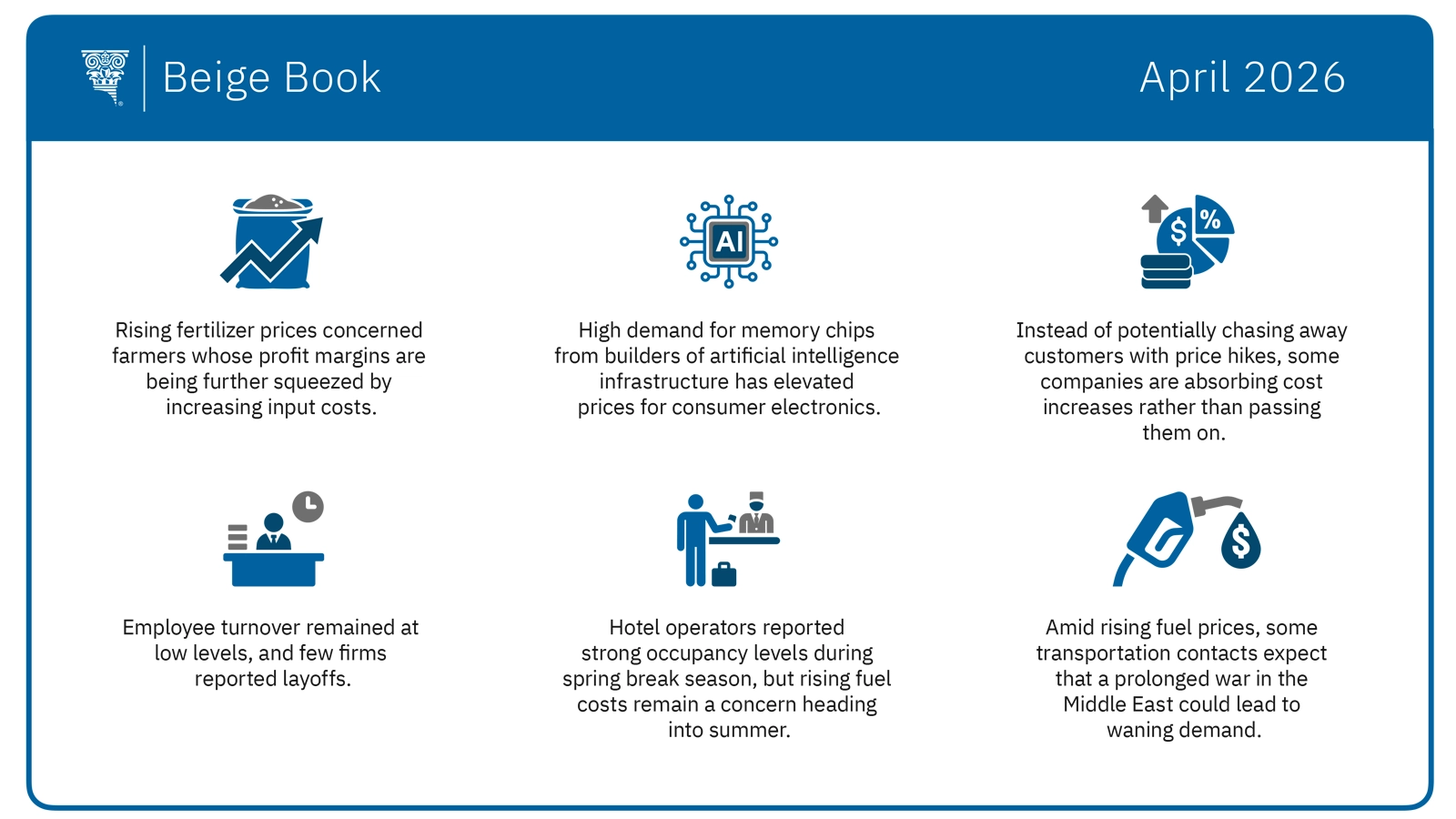
Concerns about the ramifications of the Middle East war and disruptions in energy supplies pervaded virtually every industry from agriculture to transportation, the new report says.
For example, farmers faced significant profit margin pressure from high input costs, especially surging fertilizer prices resulting from the conflict. Cotton margins were squeezed as fertilizer producers often refused to provide quotes until delivery. Fertilizer prices have risen in part because supplies of important inputs had been constricted by the closure of the Strait of Hormuz.
About pricing broadly, developments in the Middle East have already contributed to fuel cost increases and additional shipping surcharges, according to the Beige Book. Pricing power varied across sectors: consumer-facing firms continued to absorb costs rather than chase customers away, while providers of specialized business products or services reported little resistance to price increases. Meanwhile, builders of artificial intelligence infrastructure have been gobbling up so many memory chips that scarcity of the processors pushed up prices for consumer electronics.
In the energy sector itself, most contacts expect crude oil prices to remain elevated or continue to climb well into the summer because of extensive damage to production infrastructure in the Middle East. Contacts expect inflation pressures across the economy to intensify as a result. Petroleum refiners reported higher profit margins, particularly for diesel and jet fuel. Electricity demand was characterized as "insatiable," thanks to industrial activity and data center expansion.
In other sectors:
- On employment, most firms held head count steady or hired only to replace departing workers. Turnover remained low, and there were few reports of layoffs. At the same time, most companies cited a return to prepandemic wage increases of from 2 percent to 4 percent. However, contacts reported that competition for workers increased wages more swiftly in certain jobs in healthcare, warehousing, and skilled trades.
- Lower- and middle-income consumers continued to face significant pressure. Retailers continued to see widespread trading down from pricier to cheaper products, and food banks and other support agencies noted more requests for assistance. By contrast, higher-income consumers kept powering strong sales of luxury real estate and autos, wealth management services, and travel services.
- The spring break season proved healthy with hotel occupancies meeting expectations, though rising fuel costs raised concerns about the summer season.
- Housing starts continued to slow, and inventories were either balanced or slightly oversupplied in most areas, helping to dampen upward price pressures.
- Most transportation contacts anticipated that demand will likely decline amid rising fuel prices, the potential for supply chain disruptions, and greater uncertainty should the Iran war be prolonged.
- Most district manufacturers reported ongoing input cost pressures, an inability to raise prices, and rising uncertainty surrounding the Middle East conflict.
The Beige Book is a Federal Reserve System publication about current economic conditions across the 12 Federal Reserve districts. The Fed System and regional reserve banks publish the Beige Book eight times a year, before each meeting of the Federal Open Market Committee. The reports from each District characterize regional economic conditions based on a variety of mostly qualitative information, gathered directly from District sources, including interviews and online questionnaires completed by businesses, community organizations, economists, market experts, and other sources. The Committee next meets April 28 and 29.