
Financial Health in Louisiana: Atlanta Fed Event Yields New Insights
February 20, 2026


In October 2025, the Louisiana chapter of the Asset Funders Network hosted a community forum for financial health leaders titled Wealth for All: Advancing Financial Health for a Prosperous Louisiana. Over 60 people traveled from across the state to spend the day with peers in financial coaching and community finance industries.
The Federal Reserve Bank of Atlanta organized part of the convening as a data walk. Data walks are participatory forums where researchers and community stakeholders can collaboratively examine research findings. Participants walk through visual data displays and engage in small-group discussions to consider what the findings reveal about their community. Data walks create an accessible platform for meaningful stakeholder participation in the analysis process.1 Federal Reserve Banks have helped run data walks across the country including in Kansas City, Philadelphia, and, now, Baton Rouge.
The data walk session at the Louisiana community forum had two goals. First, for financial coaches, it aimed to bring into focus wider regional trends. It provided greater context for coaches whose daily work can tend to center on individualized budget puzzles. Secondly, for the Atlanta Fed, the session sought to collect new and timely information to complement historical economic datasets. Dialogue-based insights can help fill gaps in data, especially when it comes to regional patterns and the real-time economic experiences of low- and moderate-income communities. To this end, the Atlanta Fed regularly connects with local leaders.
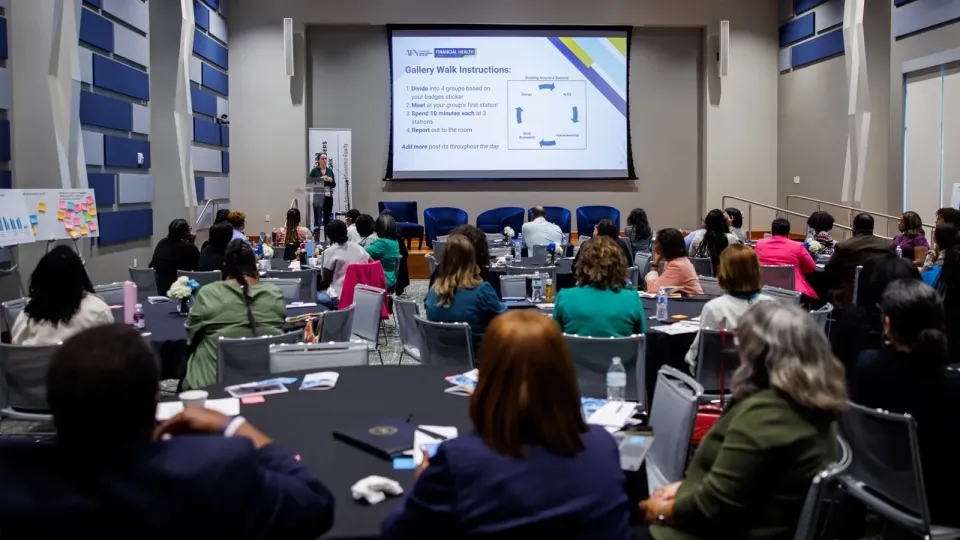
For the data walk, Atlanta Fed researchers coordinated with partners in Louisiana to pick four topics: cost of living, homeownership, small businesses, and household savings. The researchers developed charts with relevant data, printed them on large poster boards, and set them up in stations around the event space. Then, facilitators prompted participants, working in small groups, to discuss the topics and share notes on response boards before coming together at the end to exchange reflections. The session lasted about an hour.
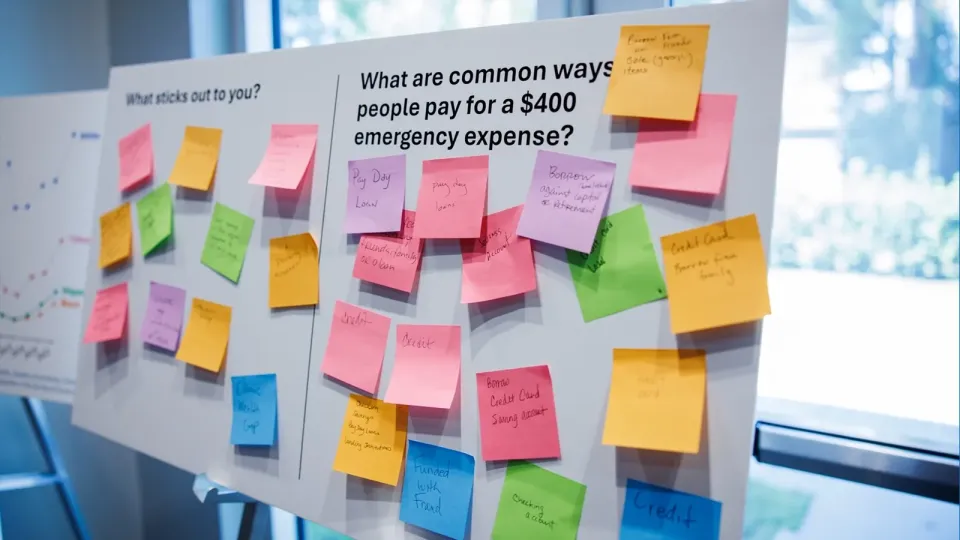
The following themes surfaced at each station:
- Cost of living (featuring data from the United Way’s 2025 State of ALICE Report for Louisiana): Participants saw a stark mismatch between wages and costs of living. One response highlighted how “it takes two fulltime jobs to get just over half of the survival budget,” and another noted that the projected costs of housing, childcare, and food alone already exceed incomes at 50 percent the area median, even before including budget for transportation or healthcare.
- Homeownership (featuring data from the Atlanta Fed’s Home Ownership Affordability Monitor): Data walk participants saw a similar disparity at this station, between lower median incomes and higher median housing costs in Louisiana. When prompted on community resources available to reduce homeownership costs, many participants pointed to homebuyer education programs. Others highlighted financial assistance like soft second mortgage options from the Louisiana Housing Corporation and special purpose credit programs.
- Small businesses (featuring data from the Federal Reserve’s Small Business Credit Survey): Participants acknowledged that marketing to the right people can be just as valuable as access to financing for a start-up company. The idea aligned with data showing that compared to small business owners across the US, Louisiana entrepreneurs are more likely to face challenges reaching customers.
- Savings & wealth (featuring data from the Federal Reserve Board’s Survey of Household Economics and Decisionmaking (SHED) and Survey of Consumer Finances and the Urban Institute’s Financial Health and Wealth Dashboard): Participants shared that $400 saved means very little to Louisianans in the event of natural disasters. They also agreed that people with fewer savings become more likely to either enact or fall for financial scams. They were struck by data showing the persistence of a stark racial wealth divide over time.
These insights from data walk conversations sparked new ideas for community action. The forum’s attendees shared plans to incorporate data into grant proposals, use data to develop 2026 nonprofit initiatives, and to educate coaching clients on community resources that surfaced during discussion. At least one of the forum partners repurposed the printed posters at a subsequent local event.
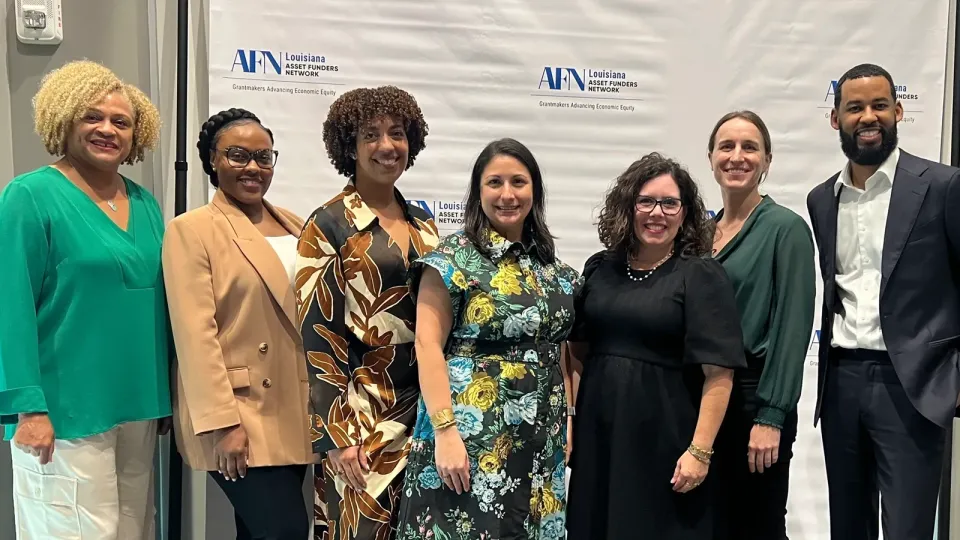
Atlanta Fed researchers prompted an authentic exchange of local economic insights in Louisiana. The data walk provided a meaningful kickoff to the community forum, sparked new conversations beyond the event itself, and left Atlanta Fed researchers with unique insights into the regional economy.
For questions about this Louisiana data walk or future data walk opportunities, please reach out to Julie Siwicki.
The views expressed here are those of the author’s and not necessarily those of the Federal Reserve Bank of Atlanta or the Federal Reserve System. Any remaining errors are the author’s responsibility.
The Federal Reserve Bank of Atlanta’s Community and Economic Development function supports the Central Bank's mandate of stable prices and maximum employment by helping improve the economic opportunity of low- and moderate-income (LMI) individuals and underserved places for a stronger economy for all Americans. Community development is one of the Federal Reserve’s core functions and this responsibility is rooted in its mandates from Congress. Partners Update articles address community and economic development trends, issues, and events.
- 1 For more information on data walks, see this Urban Institute research report, where they define a data walk as “an interactive way for community stakeholders, including residents, researchers, program administrators, local government officials, and service providers, to engage in dialogue around research findings about their community.” Brittany Murray, Elsa Falkenburger, and Priya Saxena, “Data Walks: An Innovative Way to Share Data with Communities,” Research Report (Urban Institute, November 2015). Data walks are alternatively known as gallery walks.