
2026 Atlanta Fed Presidential Search
The Bank's search for its next president and CEO is underway. Visit this page for periodic search updates, FAQs, opportunities to share input, and more.
Latest Updates
"Our committee is conducting a thorough and deliberate search for the next president of the Federal Reserve Bank of Atlanta. We maintain our focus on selecting the best candidate to serve the Sixth District, while protecting the integrity of the process," said Greg Haile, chair of the Atlanta Fed board of directors and presidential search committee. "We will provide relevant updates about this important leadership role when appropriate."
Atlanta Fed Survey Assesses the Public's Priorities in Next Bank President
This article summarizes a recent survey of what the public most wishes to see in the next Atlanta Fed president.
Video: Atlanta Fed Presidential Search Public Forum
On March 11, the Federal Reserve Bank of Atlanta hosted a live online public forum to share updates on the search for its next president and CEO.
Making Their Voices Heard: Citizens Describe Next Atlanta Fed President
With the Atlanta Fed's presidential search underway, the Bank is holding a series of listening sessions across the Southeast to augment and inform its efforts. This article describes some of those meetings and the commentary gathered.
Search Timeline
Follow the progress of the Bank's 2026 presidential search through a timeline of key dates and milestones.
Video: Learn More About the Bank's Search Process
Greg Haile, chair of the Atlanta Fed board of directors and presidential search committee, shares details about the Bank’s 2026 presidential search process.
Media Contact: media@atl.frb.org
Federal Reserve Bank of Atlanta President and CEO Raphael Bostic has announced his intention to retire on February 28, 2026. President Bostic has served with distinction since June 5, 2017, as the 15th president and CEO of the Atlanta Fed.
The president is responsible for overseeing all of the Bank's activities, including economic research and payments services. The president also serves on the Federal Reserve's chief monetary policymaking body, the Federal Open Market Committee.
The Class B and C directors of the Federal Reserve Bank of Atlanta (those directors who are not bankers) have formed a committee to conduct a broad search to identify a large pool of candidates who have meaningful ties to the Sixth Federal Reserve District. Heidrick & Struggles, an executive search firm, will assist in the search process.
The search committee will interview the top candidates and identify a finalist, who will be submitted to the Board of Governors of the Federal Reserve System. The Atlanta Fed's Class B and C directors will formally appoint the president, subject to the Board of Governors' approval.
Search Committee
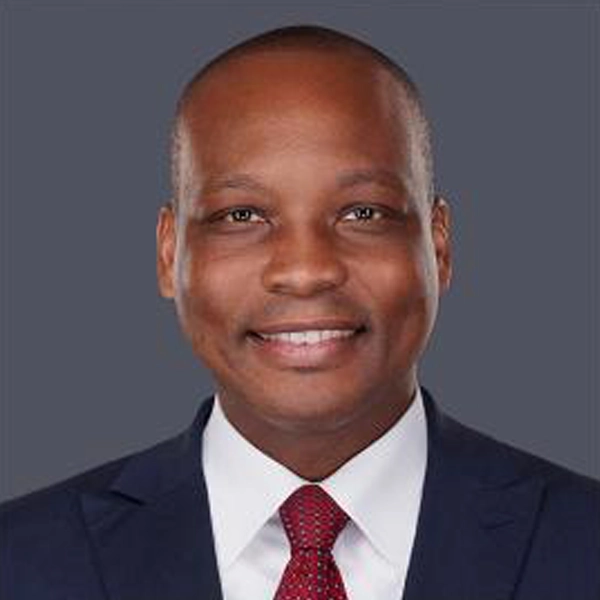
Gregory A. Haile (Search Chair)
Chief Executive Officer
Upwardly Global
Senior Fellow, M-RCBG, Harvard Kennedy School
Ft. Lauderdale, Florida

Former Chief Executive Officer
Accenture North America
Atlanta, Georgia

President and Chief Executive Officer
AMERISAFE Inc.
DeRidder, Louisiana

Former President and Chief Executive Officer
Hibbett Inc.
Birmingham, Alabama
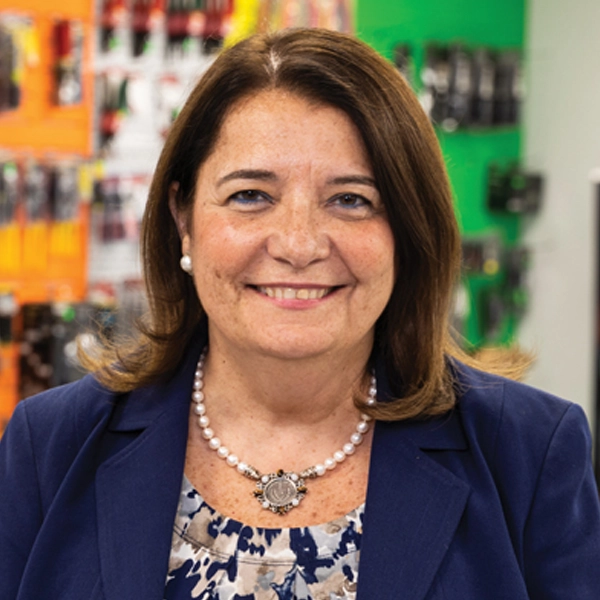
Chief Financial Officer and Treasurer
Watsco Inc.
Coconut Grove, Florida

Hospital President
Baptist Medical Center Jacksonville
Jacksonville, Florida
Share Your Input
The Atlanta Fed is committed to fostering a transparent and accessible search process, while also preserving candidates' ability to apply and be considered confidentially. The Bank encourages and will provide opportunities for public input, questions, and candidate nominations throughout the search process.
Thank you to everyone who participated in our presidential search community survey, conducted February 9–27. Your feedback will play an important role in helping identify strong candidates to lead the Atlanta Fed. We look forward to sharing insights and key findings from the survey in an upcoming article on AtlantaFed.org.
Members of the public who have questions about the search process or would like to share general feedback are invited to email PresidentialSearch@atl.frb.org.
Apply for the Position
The Atlanta Fed—in partnership with Heidrick & Struggles, the executive search firm assisting with the search—is actively welcoming nominations and expressions of interest. Candidates are invited to submit a cover letter outlining their interest in the position and relevant qualifications, along with a resume or curriculum vitae. See the full position specification. All communications will be kept strictly confidential.
Please direct all nominations and applications to the following email address: FedAtlantaPresident@heidrick.com.
More Information
In collaboration with the search firm, the search committee defined a specific job description for the Atlanta Fed's next president and CEO, which will include, among other things, the standard responsibilities of a Reserve Bank president, such as:
Monetary policymaker
- Guides the focus of Atlanta Fed economic research to inform the monetary policy debate based on demonstrated experience in finance, economics, and commerce.
- Gathers insightful, anecdotal regional economic intelligence from boards of directors and business and community leaders to inform policy decisions.
- Contributes regional insights and independent views on national and international economic issues to the Federal Open Market Committee.
- Communicates monetary policy issues and actions to constituents.
- Serves as senior policy adviser for supervisory matters and payments policy and related issues.
Chief executive officer
- Sets and communicates strategic vision for the Atlanta Fed and develops effective strategies and goals to achieve them.
- Models integrity, intellect, character, executive disposition, personal leadership, and communication skills needed to be a top leader and to energize, empower, and retain the Bank's deeply talented professional team.
- Leads strategies to identify and mitigate organizational risks.
- Collaborates with the board of directors on issues of strategic direction and policy; keeps board members informed of ongoing operations and progress on business goals and objectives.
- Develops a strong, well-rounded group of leaders for the Atlanta Fed, fostering a culture of openness, personal growth, and advancement.
- Represents the Reserve Bank in the community and promotes its presence as an involved and supportive institution; builds goodwill among constituencies.
Federal Reserve System leader
- Exhibits a dedication to the Federal Reserve System's mission and a commitment to public service.
- Engages and cooperates with other regional Reserve Bank presidents and Board of Governors members in setting and executing System-wide initiatives and enacting System policies.
- Ensures that the Atlanta Fed contributes strong performance and quality and promotes staff contributions to System initiatives.
See the full position specification.
What is the role of the Federal Reserve Bank president?
The president of a Federal Reserve Bank is the chief executive officer of the Bank. The president is responsible for overseeing all of the Bank's activities, including economic research and payments services. In addition, the president serves on the Federal Reserve's chief monetary policymaking body, the Federal Open Market Committee (FOMC).
How is a Federal Reserve Bank president selected?
The process for selecting a Federal Reserve Bank president is set forth in the Federal Reserve Act. Subject to the approval of the Federal Reserve Board of Governors, the president is appointed by the Reserve Bank's Class B and C directors (those directors who are not bankers).
To conduct the search, the Reserve Bank's board of directors forms a search committee composed of Class B and C directors. That committee hires a search firm to help identify a broad, highly qualified candidate pool. The committee considers a large nationwide pool of candidates, both within and outside the Federal Reserve System, who meet the position's qualifications.
Appointments are subject to the approval of the Board of Governors, who interview the final candidate. Following this approval, the Bank's Class B and C directors then formally appoint a candidate.
For more details, see the Board of Governors FAQs or watch a video on how the process works.
What are the responsibilities of the president, and what attributes are you looking for in a new Federal Reserve Bank president?
The Board of Governors website describes the responsibilities and notes that the Federal Reserve Banks seek candidates who can:
- guide the focus of the Bank's economic research and gather economic intelligence through interactions with the Bank's board of directors and other business and community contacts,
- provide keen insights to Federal Open Market Committee policy discussions,
- communicate clearly about monetary policy,
- be a strong chief executive officer of the Bank,
- ensure that the Bank maintains an effective system of bank supervision by faithfully carrying out its delegated authority from the Board of Governors, and
- make strong personal contributions to matters requiring collective System action or direction.
What is the length of term of a Federal Reserve Bank president?
The president of a Federal Reserve Bank is appointed for a term of five years. The terms of all the presidents of the 12 District Banks run concurrently, ending on the last day of February of years numbered 6 and 1 (for example, 2026 and 2031). The appointment of a president who takes office after a term has begun ends upon the completion of that term. A president of a Reserve Bank may be reappointed after serving a full term or an incomplete term. Reserve Bank presidents are subject to mandatory retirement at 65 years of age. However, presidents initially appointed after age 55 can, at the option of the board of directors, be permitted to serve until attaining 10 years of service in the office or age 75, whichever comes first.
What is the timeline for selecting a Federal Reserve Bank president?
The search committee will identify the most highly qualified pool of candidates. There is not a predetermined timeline. What is most important is that the search committee identify the most highly qualified candidates and follow a defined process in consultation with the Board of Governors.
If a new president is not appointed by February 28, 2026, then First Vice President Cheryl Venable would serve as interim president until the appointment process for a new president is completed.
What role does the public play in the selection of a Reserve Bank president?
The Federal Reserve Bank of Atlanta is committed to fostering a transparent and accessible search process. The Bank encourages and will provide opportunities for public input, questions, and candidate nominations throughout the search process.
We are the nation's central bank, committed to fostering a sound financial system and a healthy economy. Our public service mission is to strengthen the economy and our communities by fostering the stability, integrity, and efficiency of our nation's monetary, financial, and payments systems. We are nonpartisan and decentralized by design to conduct monetary policy that is in the long-run, best interest of the economy.
The Atlanta Fed is part of the Federal Reserve System, which includes 12 independent regional Reserve Banks, located across the United States, as well as the Federal Reserve Board of Governors in Washington, DC. Each Reserve Bank brings distinct data and perspectives from their regions to the Board of Governors, so the economic experiences of all Americans are represented in the formation of monetary policy.
The Federal Reserve Bank of Atlanta territory covers the Sixth Federal Reserve District, which includes Alabama, Florida, and Georgia and portions of Louisiana, Mississippi, and Tennessee. The Atlanta Fed has branches in Birmingham, Jacksonville, Miami, Nashville, and New Orleans.
Established by Congress in 1913, the Federal Reserve promotes a healthy economy and financial stability by:
- Setting the nation's monetary policy to promote our economic goals of maximum employment, stable prices, and moderate long-term interest rates.
- Promoting financial system stability by monitoring financial system risks and engaging at home and abroad to support a healthy economy for US households, communities, and businesses.
- Supervising and regulating financial institutions to help ensure the safety and soundness of individual institutions and monitoring their effect on the financial system as a whole. The Federal Reserve also provides financial services to depository institutions, the US government, and foreign official institutions.
- Fostering a safe, efficient, and accessible payments system for US dollar transactions and electronic fund transfers.
- Promoting consumer protection and community development by engaging with individuals, as well as community and business leaders, to better understand local economic conditions, issues, and the effects of financial services policies and practices on consumers and communities. We also provide economic and financial education resources to support teachers, students, and consumers.