

Economic activity across the Sixth Federal Reserve District expanded slightly in the last month and a half of 2025, but no sectors reported more than a modest uptick in the new Beige Book  report from the Federal Reserve Bank of Atlanta.
The Federal Reserve is charged by Congress with pursuing a dual mandate: sustainable maximum employment and price stability.
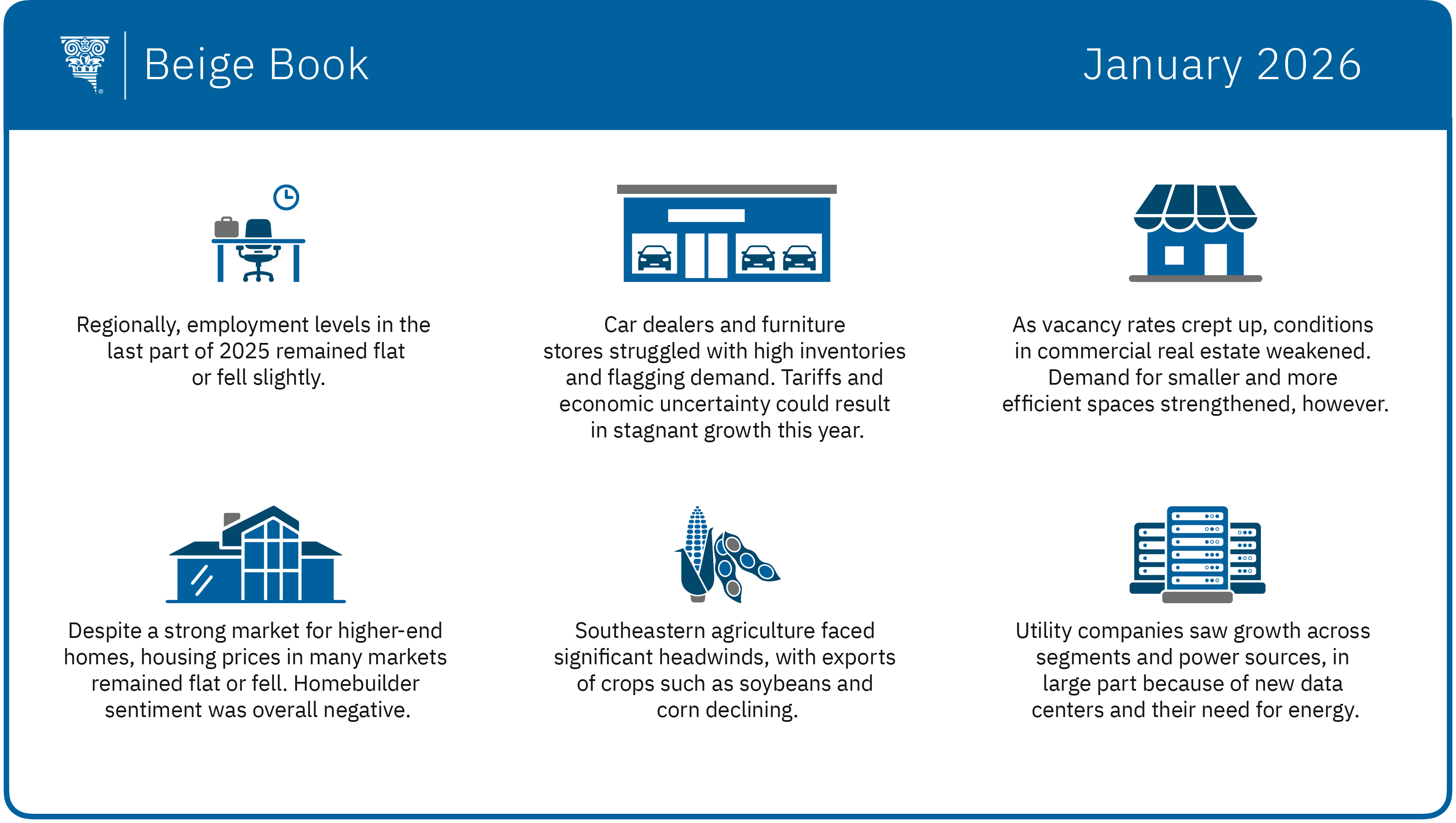
Employment levels across the six-state district were flat to lower in the period from mid-November through December. More employers than in the previous weeks said they had trimmed staff. Several Atlanta Fed business contacts also described more intense use of artificial intelligence (AI) to boost productivity and manage head count, though some contacts said it would be years before AI significantly affects employment levels.
Meanwhile, cost pressures associated with tariffs persisted as prices overall rose slightly. Labor, technology, and insurance remained the most frequently cited cost concerns. Many contacts said they expect to increase prices in the first half of 2026 to preserve profit margins, especially contacts that held prices steady in 2025.
In other economic sectors:
The Beige Book is a Federal Reserve System publication about current economic conditions across the 12 Federal Reserve districts. The Fed System and regional reserve banks publish the Beige Book eight times a year, before each meeting of the Federal Open Market Committee. The reports from each District characterize regional economic conditions based on a variety of mostly qualitative information, gathered directly from District sources, including interviews and online questionnaires completed by businesses, community organizations, economists, market experts, and other sources. The Committee next meets January 27 and 28.

Staff writer for Economy Matters